
Enhancing Modern Organizational Development for Growth

Growth is not just a goal; it’s a journey. Like a river carving its path through the landscape, organizations must continuously evolve to stay relevant and thrive. But how do you ensure your organization flows with the current instead of against it? The answer lies in enhancing modern organizational development.
Organizational growth is more than expanding revenue or increasing headcount. It’s about cultivating an ecosystem where every part works in harmony, adapting to change with agility and purpose. Think of your organization as a forest. Each tree, branch, and leaf plays a role in the health of the whole. When one part flourishes, the entire forest benefits.
But what does this mean in practice? How can leaders and strategists foster such an environment? Let’s dive into the core principles and actionable strategies that can transform your organization into a thriving, adaptive collective.
Embracing Modern Organizational Development: The Nature of Change
Modern organizational development is like the seasons in nature - constant, inevitable, and necessary. It’s about recognizing that change is not a disruption but a natural cycle that brings renewal and growth. Just as a forest sheds leaves in autumn to prepare for new growth in spring, organizations must shed outdated processes and mindsets to make room for innovation.
To embrace this, start by fostering a culture that values learning and experimentation. Encourage teams to view failures as stepping stones rather than setbacks. This mindset shift creates a fertile ground for creativity and resilience.
Practical steps to embrace modern organizational development:
Create safe spaces for dialogue: Open communication channels where ideas and concerns can be shared without fear.
Invest in continuous learning: Provide resources and time for employees to upskill and explore new concepts.
Encourage cross-functional collaboration: Break down silos to enable diverse perspectives and holistic problem-solving.
Implement feedback loops: Regularly gather and act on feedback to refine processes and strategies.
By adopting these practices, organizations become more like ecosystems - interconnected, dynamic, and self-sustaining.

What is the difference between HR and OD?
Many confuse Human Resources (HR) with organizational development, but they serve distinct purposes. HR traditionally focuses on administrative functions such as hiring, payroll, compliance, and employee relations. It’s the backbone that ensures the organization runs smoothly on a day-to-day basis.
Organizational development, on the other hand, is strategic and transformational. It looks at the bigger picture - the health of the entire organization. OD involves diagnosing issues, designing interventions, and facilitating change to improve effectiveness and adaptability.
Think of HR as the gardener who waters and prunes individual plants, while OD is the ecologist who studies the entire garden’s ecosystem to ensure long-term sustainability.
Understanding this difference is crucial for leaders who want to drive meaningful growth. While HR manages the parts, OD orchestrates the whole.
The Role of Leadership in Cultivating Growth
Leadership is the sunlight that fuels the growth of an organization. Without it, even the most fertile soil remains barren. But leadership today requires more than authority; it demands empathy, vision, and the ability to inspire collective action.
How can leaders cultivate an environment where growth is inevitable? By becoming gardeners of culture and architects of change.
Key leadership actions to enhance organizational development:
Model adaptability: Show willingness to learn and pivot when necessary.
Empower teams: Delegate decision-making to those closest to the work.
Foster psychological safety: Encourage risk-taking without fear of punishment.
Align purpose and values: Connect daily tasks to the organization’s mission to boost engagement.
Champion decentralization: Move away from rigid hierarchies to more fluid, networked structures.
When leaders embody these qualities, they create a climate where innovation and growth can flourish naturally.

Practical Tools to Drive Organizational Growth
Growth without direction is like a river flooding its banks - destructive rather than constructive. To channel growth effectively, organizations need practical tools that guide development while allowing flexibility.
Here are some proven tools and methods:
Agile frameworks: Promote iterative progress and responsiveness to change.
Systems thinking: Understand how different parts of the organization interact and influence each other.
Change management models: Use structured approaches like Kotter’s 8-Step Process to implement transformation smoothly.
Data-driven decision making: Leverage analytics to identify trends, measure impact, and adjust strategies.
Employee engagement surveys: Regularly assess morale and identify areas for improvement.
Implementing these tools requires commitment but yields dividends in resilience and performance.
Unlocking the Power of Decentralized Models
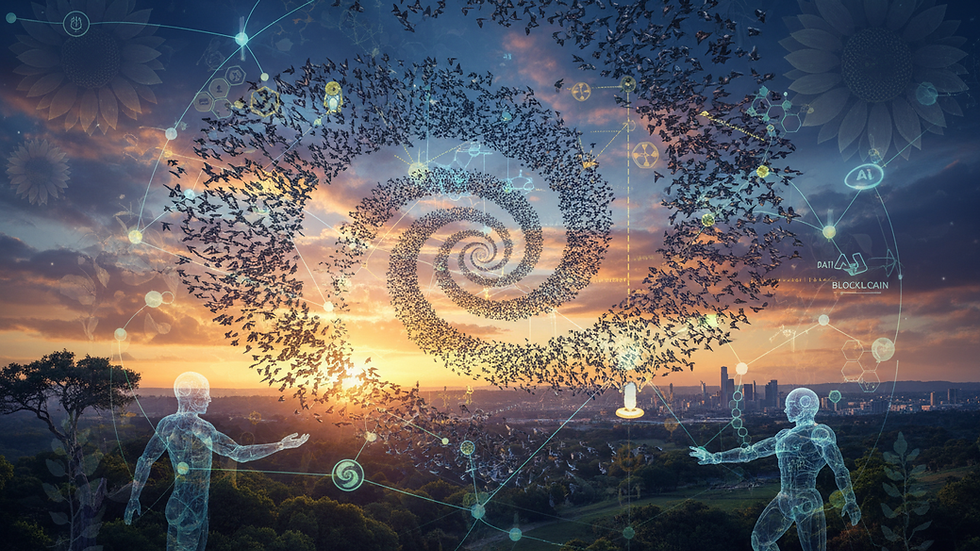
Nature rarely relies on a single point of control. Instead, it thrives through decentralized networks - think of ant colonies, bee hives, or mycelium webs underground. These systems are robust, adaptive, and self-organizing.
Why not apply the same principles to organizations?
Decentralized models distribute authority and decision-making closer to the front lines. This leads to faster responses, greater innovation, and higher employee ownership.
To unlock this power:
Redesign structures: Flatten hierarchies and create autonomous teams.
Invest in technology: Use collaboration platforms that support distributed work.
Develop shared purpose: Ensure all members understand and commit to common goals.
Train for self-management: Equip teams with skills in conflict resolution, planning, and accountability.
The result? An organization that behaves less like a rigid machine and more like a living organism - capable of evolving with its environment.
Growing Beyond Traditional Boundaries
In today’s fast-paced world, sticking to old models is like trying to grow a tropical plant in a temperate climate - it simply won’t thrive. Forward-thinking organizations must look beyond traditional boundaries and embrace new paradigms.
This means:
Integrating sustainability: Align growth with environmental and social responsibility.
Leveraging diversity: Harness varied perspectives to spark innovation.
Building ecosystems: Collaborate with partners, customers, and communities to co-create value.
Adopting continuous transformation: View change as an ongoing process, not a one-time event.
By doing so, organizations position themselves not just to survive but to lead in the 21st century.
Growth is a living process. It requires nurturing, adaptation, and a willingness to let go of old ways. By enhancing modern organizational development, we can create organizations that are not only successful but also resilient and meaningful.
Are you ready to cultivate your organization’s future like a thriving forest - diverse, interconnected, and ever-growing?
Evert Bleijenberg MBA
SWARM Organisation


Comments